October 05, 2010
Another game bird!
As I walked down the hill I got the fright of my life- as I suspect did the sleeping bird- when I stood on the tail feathers of one of our game birds. It is one of the attractions of autumn and especially the month of October that it brings with it another seasonal game bird - the Pheasant. The shooting season for pheasant opens on the 1st of October and lasts until February. Pheasant (Phasianus colchicus) similar to the partridge is a member of the phasianidae family, a large long tailed game bird. Males (cock) have rich chestnut, golden brown and black markings on their body and tail, with a dark green head and red face wattling. Females (hen) are mottled with paler brown and black markings.
Although they originated from Asia, they were introduced to the U.K a long time ago however more recent introductions have brought in a variety of races and breeds for sport shooting. Pheasants can be spotted all year round across most of the U.K. main land apart from the far North West of Scotland. Their preferred habitat is in open countryside near woodland edges and hedgerows and feed mainly on seeds, grains and shoots. Pheasants are able short distance fliers, however they prefer they prefer to run and walk around.
When it comes to hanging pheasants at the beginning of the season (October) with it being warmer weather and younger birds, they should only be hung for up to three days, whereas in cold, winter days, older birds are usually hung for up to ten days. Hen pheasants are believed to have a nicer taste and are often should be preferred over males. They have a delicate mild game flavour, which is also affected by the time of the season which they are consumed in - younger and early season birds tend to be more delicate and tender.
As with any other game bird in the Eriska kitchen, pheasant are roasted as crowns (helping to maintain all the natural juices and as much flavour as possible), the thighs are usually stuffed whilst the drum sticks make it very tough and full of sinew which can be roasted off for stock and used for broths, consommés or reduced to a sauce.
Posted by Beppo Buchanan-Smith at 06:48 PM in Food and Drink, Scottish hotel life, Scottish wildlife | Permalink | Comments (0)
September 29, 2010
Wise words from the kitchen
We seem to have seen the last of the summer here at Eriska, however we are still hopeful for the odd ray of sunshine before the winter finally sets in. Having already experienced a few cold and frosty nights at Eriska, this signals the mushroom season is getting close to an end, although some types will still be found around Eriska until late autumn and early winter. Wise words from Tyron in our kitchen will shed some light on the mushroom which has featured in many of Eriska’s dishes this month… So what is a mushroom? Mushroom and any fungus is only the reproductive part of the organism, known as the fruit body (the actual mushroom which we get to see), which develops to form and distribute the spores. Fungi in their structure have some similarities to plants, but they lack chlorophyll, and are therefore unable to build up the carbon compounds essential to life, instead they draw their substances ready made from living or dead plants, or even animals as animals do. Mushrooms are composed of very thin tubes known as hyphae. The hyphae develop into a fine cob web like net known as the mycelium and grow through the material from which the fungus obtains its nutrition. In most cases the mycelium is very fine and can’t be seen without the aid of a microscope. To produce a fruiting body two mycelia of the same species have to band together, then given the right conditions of nutrition, humidity, temperature and light, a fruit body will be formed and with sufficient water, expand into a mushroom. A fruit body may only exist for a few days before rotting away but the mycelium which produces it might live for years. The larger fungi are divided into two distinct groups: The spore droppers, and The spore shooters. The spore droppers: Basidiomycetes, in these the spores are developed on the outside of a specialized, club shaped cells called Basidia. As they mature the spores fall from the basidia and are normally distributed by the wind. Boletus, puff balls and chanterelles fall under this category of spore dropping. The spore shooters: Ascomycetes, also called Ascos, form spores within clubs of flask-shaped sacs called asci. When the spores have matured they are shot out through the tip of the ascus. Morels and truffles belong to this group of fungi. Fungi are the third natural kingdom, just as important as animals and flowering plants. The world of plants is incredibly dependant on fungi. Fungi break down leaf litter and dead wood and thus ensure that the surface has a fertile soil rather than being a heap of detritus
Posted by Beppo Buchanan-Smith at 03:13 PM in Food and Drink, Scottish food and drink, Scottish hotel staff, Scottish wildlife | Permalink | Comments (0)
Wise words from the kitchen
We seem to have seen the last of the summer here at Eriska, however we are still hopeful for the odd ray of sunshine before the winter finally sets in. Having already experienced a few cold and frosty nights at Eriska, this signals the mushroom season is getting close to an end, although some types will still be found around Eriska until late autumn and early winter. Wise words from Tyron in our kitchen will shed some light on the mushroom which has featured in many of Eriska’s dishes this month… So what is a mushroom? Mushroom and any fungus is only the reproductive part of the organism, known as the fruit body (the actual mushroom which we get to see), which develops to form and distribute the spores. Fungi in their structure have some similarities to plants, but they lack chlorophyll, and are therefore unable to build up the carbon compounds essential to life, instead they draw their substances ready made from living or dead plants, or even animals as animals do. Mushrooms are composed of very thin tubes known as hyphae. The hyphae develop into a fine cob web like net known as the mycelium and grow through the material from which the fungus obtains its nutrition. In most cases the mycelium is very fine and can’t be seen without the aid of a microscope. To produce a fruiting body two mycelia of the same species have to band together, then given the right conditions of nutrition, humidity, temperature and light, a fruit body will be formed and with sufficient water, expand into a mushroom. A fruit body may only exist for a few days before rotting away but the mycelium which produces it might live for years. The larger fungi are divided into two distinct groups: The spore droppers, and The spore shooters. The spore droppers: Basidiomycetes, in these the spores are developed on the outside of a specialized, club shaped cells called Basidia. As they mature the spores fall from the basidia and are normally distributed by the wind. Boletus, puff balls and chanterelles fall under this category of spore dropping. The spore shooters: Ascomycetes, also called Ascos, form spores within clubs of flask-shaped sacs called asci. When the spores have matured they are shot out through the tip of the ascus. Morels and truffles belong to this group of fungi. Fungi are the third natural kingdom, just as important as animals and flowering plants. The world of plants is incredibly dependant on fungi. Fungi break down leaf litter and dead wood and thus ensure that the surface has a fertile soil rather than being a heap of detritus
Posted by Beppo Buchanan-Smith at 03:12 PM in Food and Drink, Scottish food and drink, Scottish hotel staff, Scottish wildlife | Permalink | Comments (0)
September 28, 2010
Spanish weekend Memories!
Having just returned from a Spanish Jaunt with limited memory I asked one of my fellow travellers to record the events and below is his report
"Fine wine, dine, recline." These were the only four words I could utter to my wife when she asked how our trip went. I was being collected from the airport on Sunday night, knowing that I might be over the limit until mid-week. The joyous occasion was Beppo's stag do and as you can imagine it was a fittingly gastronomic event.
After the inevitable delay to our flights (the French strike was to blame) we found ourselves in the delightful city of San Sebastian, in northern Spain, which is fast becoming known as a culinary capital. We were introduced to the 'pincho', which I understand is Spanish for spike, or 'pintxo' in Basque. This is the Basque Country's version of tapas, which is central to the culture of drinking and socialising.
The next day we walked part of the northern coastal route that makes up one of the longer branches of the network of ancient pilgrim routes of the Camio de Santiago (the way of St James). Some expert planning made a diversion to a local vineyard possible. Urki is a relatively new winery with the latest technology but which produces txakoli in a traditional way. Their vibrant straw coloured, slightly sparkling, wine is very elegant and has distinguished aromas. Our hosts showcased their wines with a small number of well-matched pinchos and gave us a tour of their production facilities.
After the tasting we were back off on the coastal trail. Our arrival at the restaurant knocked as a very welcome visitor on the door of our 'inner man', so to speak. We lunched on the most wonderful shellfish and two absolutely enormous barbecued turbot. A short siesta followed.
That evening we enjoyed a truly magnificent parallel blind tasting in the epicurean surroundings of Akelare, Pedro Subijana's restaurant. Akelare is the Basque word for a witch's coven, and they certainly know how to work magic through their Aranori degustation menu. A particular highlight of the menu was the roast pigeon. However, it was hard to choose between this manumission of flavors and textures.
The stag party enjoyed the weekend immeasurably and we can unconditionally recommend San Sebastian as a destination for a short break. Great weather, great food, great wine, and most of all, great company! It was a fitting way to celebrate the impending nuptials of our dear friend.
Vernon Gayle"
Posted by Beppo Buchanan-Smith at 09:25 AM in Food and Drink | Permalink | Comments (0)
September 23, 2010
Early bird- early worm!
It has been a busy week here at Eriska with filming and renovations happening at the Hotel. Today alone we have already been visited by a Camera Crew, carpet fitters, curtain fitters, interior designers and one of our suppliers - Willie Fish!
Our team in the Kitchen were up at the crack of dawn this morning to ensure they were looking their best for our film shoot. Having reached the final of the Scottish Thistle Awards “Taste of Scotland Award” for the second year running, we were asked to provide some footage of our behind the scenes work in the kitchen from source to plate, to highlight our work with local suppliers and their produce as well as our own home grown produce on Eriska. Our head chef, Robert, was joined by Tyron in the Kitchen and Willie from Oban’s “Willie Fish” to enjoy their 15 minutes of fame as the cameras rolled. An hour and a half later, after a lot of hard work, we had enough footage to call it a day so all we can do now is wait to hear and see the end result on 29th October.
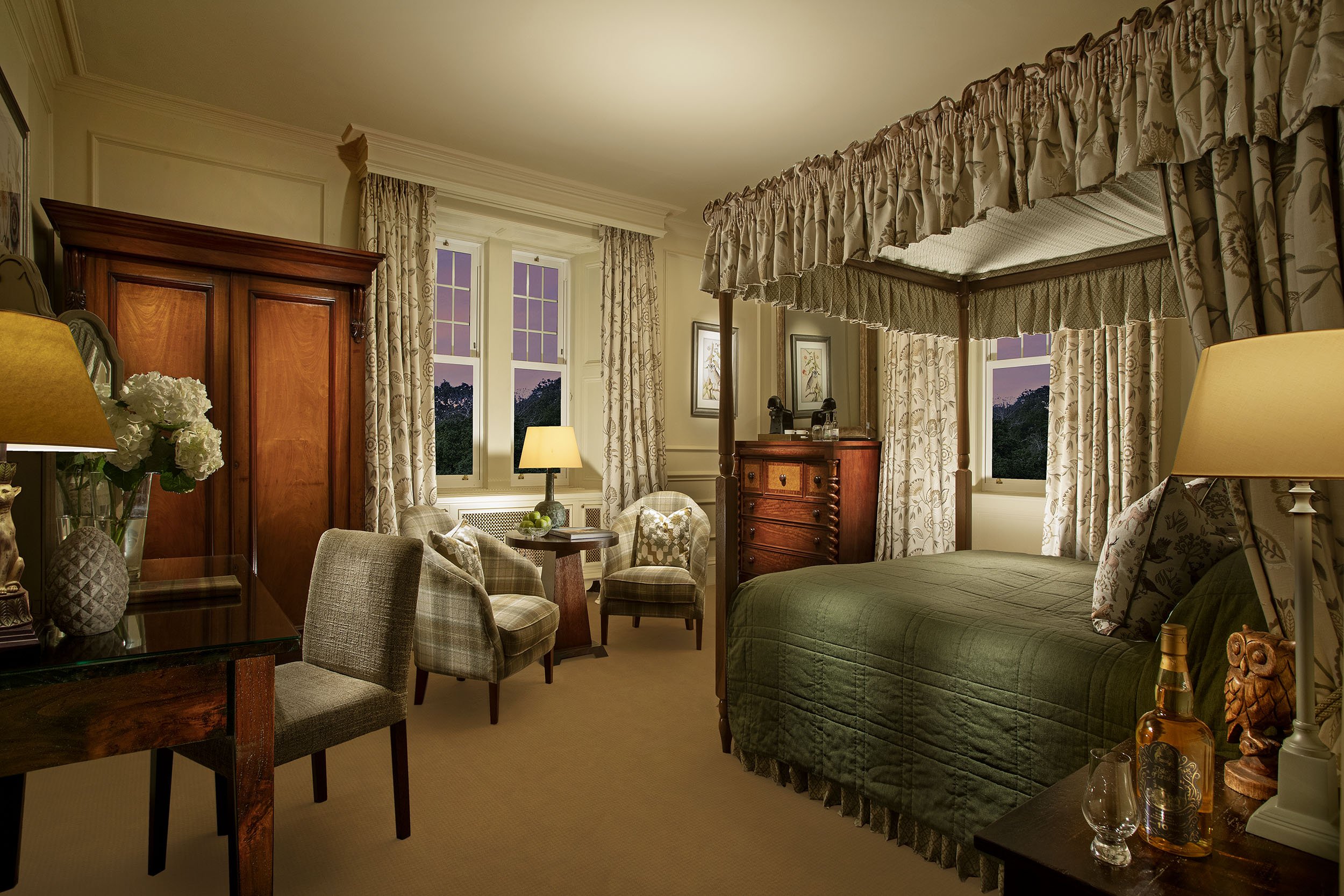
Meanwhile, we are continuing to press ahead with refurbishing the rest of our rooms in the main house to keep it fresh and welcoming for our past, present and future guests. The carpet fitters, curtain fitters and interior designers have been hard at work over the past few days as 3 of our rooms in the main house, Soay, Iona and Seil, have been undergoing renovation. With only today left to finish off these rooms, the carpets were laid, and the finishing touches made to the rooms ready for our guests coming to stay with us tomorrow!
Posted by Beppo Buchanan-Smith at 06:31 PM in Food and Drink, Scottish food and drink, Scottish hotel life, Scottish hotel staff | Permalink | Comments (0)
September 07, 2010
Tyronnes Fruit Advice!
Some news from one of our Chefs, Tyron…
We are in the heart of the blackberry season here in Scotland and a walk down the drive at Eriska will prove that. Blackberry, or as better known here in Scotland as the Bramble (Rubus fruticosus), is abundant in woods, hedges, scrubs and heaths.
A prickly shrub that flowers from May to September, it is believed that the bramble was consumed as early as Neolithic times here in the U.K. The fruit changes color from green to red to a deep purple to black, before it is ready to be picked. It fruits from August to November, however the best time to harvest brambles is from late August until early October, after which it tends to go too soft and moldy. An urban myth suggests that on October the 10th, the devil goes by and spits on every bramble bush, thus infecting the fruit which tends to go watery and flavorless at this time because of the frosty nights.
It is believed that there are at least 400 micro species spread all over the British Isles, differing slightly in flavour, sweetness, fruiting time, nutritional content and size.
When picking brambles, always try to pick the lowest berry right at the tip of the stalk- this is the first to ripen and is the sweetest and fattest of all good brambles to be eaten raw. The others will ripen in a few days or weeks after, and will be perfect to make a good pie or jam!
Posted by Beppo Buchanan-Smith at 06:32 PM in Food and Drink, Scottish food and drink, Scottish hotel staff | Permalink | Comments (0)
July 28, 2010
Wine exam success
It is now nearly 6 months since we started a new strategy with the wine list here at Eriska. It all came about last year when I sat in on a staff training session being given by one of our suppliers and realised, probably rather naively, that the tutor was giving a fairly biased view of wine- concentrating on his own brands, and that whilst the team were learning how to sell his products they were neither really increasing their knowledge nor were they gaining the kind of information that we were wanting to offer our clients.
At the same time we were lucky to be contacted by an old friend who had just set up his own wine company offering support and training and I realised that if we were really serious about developing our list and knowledge then we needed some outside help so we engaged Nick adams to work with us with a simple direct set of instruction to help us. It was a three pronged attack , firstly to develop the list offering a breadth of choice and selection for all who stay with us allowing them to vary their drinking from different areas with different styles especially if they were with us for a few days and wanted to try alternatives, secondly to help develop the knowledge of those who work with us and thirdly and probably most importantly to insure that we buy the right wines for the right price so that we can sell them.
So today was the culmination of one of these legs with te results of the WSET Intermediate Wine course we ran and the examination that they had sat. It was a fairly traumatic day with many of us, including me as this was the first exam I had taken in years and sitting down with pen in hand awaiting to turn over the paper just brought back terrible memories of exams in a school sports hall. Anyway the results are in a luckily my result was not the worst and declared a pass and even more interestingly many of the team achieved both marks of merit and even some distinctions. Now we shall wait and see how this transfers to sales and assistance with explaining the list. We have given them the tools now lets see how it works or maybe its a case of too much knowledge in the wrong hands can be a terrible weapon!!
Posted by Beppo Buchanan-Smith at 08:49 PM in Food and Drink, Scottish food and drink, Scottish hotel life, Scottish hotel staff | Permalink | Comments (0)
March 23, 2010
Wine growth investigation
We have now been working on developing our wine list for a couple of months. Up until last year we worked with our suppliers and the team here at Eriska and on the principle that if it worked don't fiddle with it we simply reacted to guests requests for suggested improvements to the list and when a supplier produced an interesting addition we considered it in the context of the rest of the list. in return for buying the wine we also received training and support from the suppliers and on the whole it allowed us to offer team development however I had become aware that this type of evolution was becoming one dimensional sand that whilst the team were becoming incredible ambassadors for the wine son our list their general knowledge of wine was slightly skewed towards the wines we listed and this was not necessarily offering them a rounded picture.
So we engaged the help of Nick Adams, a Master of Wine and he has not only helped us look at our list in an unbiased and open manner but has also started offering wine and Spirit education trust training to te team. Part of his remit has been to evolve the list and make it more user friendly so that it is easy to use and will help both staff nd guests work their way round the world of wine. As with all developments these plans take time to unfold and part of the fun is the process of developing what we currently offer into what we hope to eventually achieve. To this extent we have held a number of tastings and after each one new additions are made and the list develops.
Once upon a time the list was set at the start of the year, a supplier printed and bound the list and it remained for the whole season, now the list is dynamic and vintages and supplies vary allowing us to offer the best available selection at the best price- sometimes this can give us an advantage allowimng us to buy small packages of wine, sometimes it allows vintage update sto be reflected but in all it requires the team here to be more proactive and whilst it needs more input and knowledge it is this which makes it far more interesting and creates development nd evolution.
One of the key parts is the tasting panel when we all have the chance to put in our two pennies worth which involves looking at wines and considering whetehr they offer value for money, a region, taste or style we need on the list and ultimately a wine we can sell and feel good about recommending. This obviously causes discussion as everyone in the team has different favourites and styles and it is always easier to sell a wine you personally like and would buy and with French, German, Italian, South African and Scottish members of the team there is always a sense of patriotism in the discussion although as the Scot I am not that keen on Birch wine!
Anyway with an Italian wine Waiter in Andrea I was a bit concerned that the sales from Italy seemed to be dominating the general targets and it was soon easy to see how his passion and enthusiasm had been affecting the choice of guests, however I was keen not to stamp on the enthusiasm but to try and develop it and expand it to other regions as well. However the other night I was asked by a guest to recommend a wine and after a brief discussion I knew a wine that matched exactly his request so flipped to the page I expected it to be listed on and after double taking and frantically searching I excused myself and hid in the office for a few minute to check my eyesight.
Indeed not only was this particular wine missing but so was the whole region in question and even worse so was the whole country but after a closer inspection this was not the worst part this was the fact that in an oversight when the new list had been compiled Andrea seemed to have omitted some countries at the gain of his beloved italy with a couple of reprinted and pages taking their place. Luckily for him and my blood pressure there seemed only to be one list with such an error so it was truly a mistake and oversight and not a deliberate diversion of guests to Italy! Now I am aware that if a certain region sales increase then before congratulating the team on their sales skill i should check what we are offering as a matter of choice to the guests!!
Posted by Beppo Buchanan-Smith at 07:45 AM in Food and Drink, Scottish food and drink, Scottish hotel life, Scottish hotel staff | Permalink | Comments (1)
March 09, 2010
Ever Evolving Wine Tasting
This weekend we organized our spring wine event and with the support and help of Andrew Barraclough of the New Zealand Wine company we managed to lay on a tasting with a difference. The initial idea had been to center the event on a dinner with a live web link to New Zealand and one of the wine makers. the concept seemed adventurous and exciting but when we got to the nuts and bolts of the evening and arranging the link we really got cold feet and then Andrew highlighted the pit falls and our feet became freezing so a different approach was called for which did not rely on Eriska Broadband connection speed or time zone negotiation!
So on saturday afternoon we assembled a collection of Sauvignon Blanc, from new Zealand as this is the major export in terms of wine from New Zealand and concentrated on wines easily available in the UK to our guests. the first fact to arise was the huge variety of prices available across the UK depending on source and various promotions and the we started to compare and contrast each style as we were led by Andrew through te various nuances. After some heated discussions and constructive debate everybody had a few moments to prepare for dinner and we reconvened in the hall for stage two which was a concentration on Grove Mill a winery represented by Andrew and famous for being one of te first Carbon Neutral wineries in the world.
Not only did we have a chance to sample the complete range and enjoy the pairings Robert and his kitchen team had chosen but Andrew was able to guide and assist with the tasting highlighting strengths and styles in the wines. once again it was a fascinating evening and i am certain that all would have left eriska on Sunday knowing a little more and hopefully being a bit wiser next time they were confronted by a choice in the supermarket!
Posted by Beppo Buchanan-Smith at 08:17 PM in Food and Drink, Scottish food and drink, Scottish hotel life | Permalink | Comments (1)
February 12, 2010
Food overfill and brain overload
I am starting to feel that I know what Mr Creosote felt in that infamous sketch when he requires just a wafer thin mint- having been in Belgium for two days and enjoyed two excellent dinners which were both incredibly educational in terms of style and quality but also lengthy in that one was 8 courses and 3 hours and the other a similar length of time although slightly fewer courses but made up buy the size of the portions! and then before returning to Scotland I met Robert in London and we went to the Fat Duck for lunch. It all seemed a good idea at the time of booking and I had thought it would be good to compare and contrast the styles but I had neglected to consider my waistline and ability to stack away the product.
Needless to say I did make a fair game of it and tried not to let Britain down by enjoying and trying all on offer in Belgium- which did include various new herbs and spices and some new fish dishes and even Moose an experience that although interesting is not one I will be recommending Robert to pursue - however local he thinks it is! The outstanding fact though to me was the diverse location and geography of most of the ingredients and it just highlighted to me how fortunate we are at Eriska with the wealth of produce not only locally but also on our own doorstep.
The first restaurant in Gent was renowned for its modern technical molecular cuisine and it did not disappoint, opened specially for the evening as it is normally only open 3 nights a week each- course was an education and even the canapes and petite fours were different and thought provoking.
The second was in Antwerp at the lunch Loung Het Gerbaar and it had started as a dessert restaurant and now is open only for lunch and afternoon tea but has managed to gain a high reputation and even achieved in Gault Millau a considerable achievement. again we had a wonderful achievement which whilst being a bit more down to earth was still interesting and full of wonderful little touches. This however was only to set me up for the final leg in the trilogy which was lunch at the fat Duck in Bray with Robert the next day.
So it was an early start and back to blighty for what I suspected would be a traditional british Fare but it turned out not quite as i had expected! Whilst i had been prepared for something a bit different having read the book, although briefly, i had not been expecting the combination of cuisine, chemistry and theatre that followed. It deconstructed many well known dishes and then presented them in differing unusual guises and once I have had a chance to dissect the day i will post more about the meal which we all enjoyed-
Posted by Beppo Buchanan-Smith at 08:50 PM in Food and Drink, Scottish food and drink | Permalink | Comments (0)